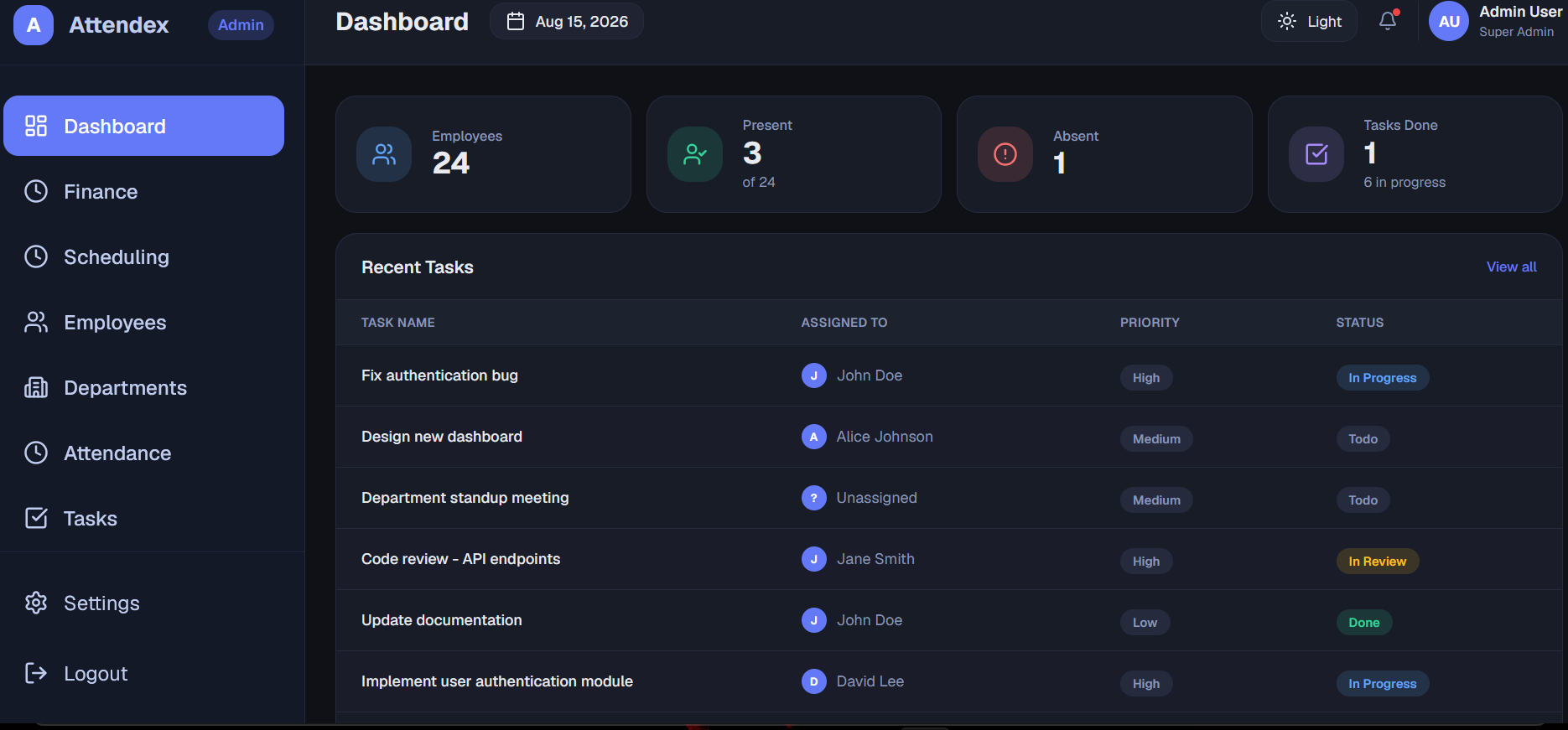
attendex started as a simple ask: a way for a small team to clock in and out and see who's actually working on what, without a spreadsheet six people are editing at once.
0. the idea
1. architecture
Stack:
- Node.js (Express) for the check-in / check-out API
- Oracle APEX for the internal admin and reporting screens
- JWT-based auth for employee logins
Splitting it this way was a practical call — the public-facing check-in flow needed to be fast and simple, while the internal reporting side benefited from APEX's low-code approach to building admin screens and dashboards quickly.
2. features
What it does:
- Clock in / clock out with timestamped records
- Task assignment and status tracking
- Attendance history and exportable reports
- Role-based views — employee vs. admin
3. a challenge — messy real-world clock-ins
People forget to clock out. Phones lose signal mid check-in. Two people share one kiosk device and forget to switch users. None of that is a coding problem exactly — it's a 'what do we do when the data is obviously wrong' problem.
Instead of trying to prevent every bad state, auto-close any shift still open past a sane cutoff (end of day) and flag it for admin review, rather than silently trusting a 14-hour 'shift'. Handling the messy case explicitly beats pretending it won't happen.
4. the code
router.post("/check-in", authenticate, async (req, res) => {
  const openShift = await Shift.findOne({
    employeeId: req.user.id,
    checkOutAt: null,
  });

  if (openShift) {
    return res.status(409).json({ error: "Already checked in" });
  }

  const shift = await Shift.create({ employeeId: req.user.id });
  res.status(201).json(shift);
});
5. what i learned
Oracle APEX is genuinely fast for building internal dashboards — screens that would take a day in React took an hour. The tradeoff is it's much harder to version control and code-review in a normal git workflow, so I kept it strictly to internal admin tooling and left anything employee-facing in the hand-written API.